


Please Wait...
To get you all the results so you can compare the best options
 -
16 Nov, 2026 -- 17 Nov, 2026
For cheapest fares on selected flights, please call us now!
+91 9910326021To get you all the results so you can compare the best options
-
16 Nov, 2026 -- 17 Nov, 2026
For cheapest fares on selected flights, please call us now!
+91 9910326021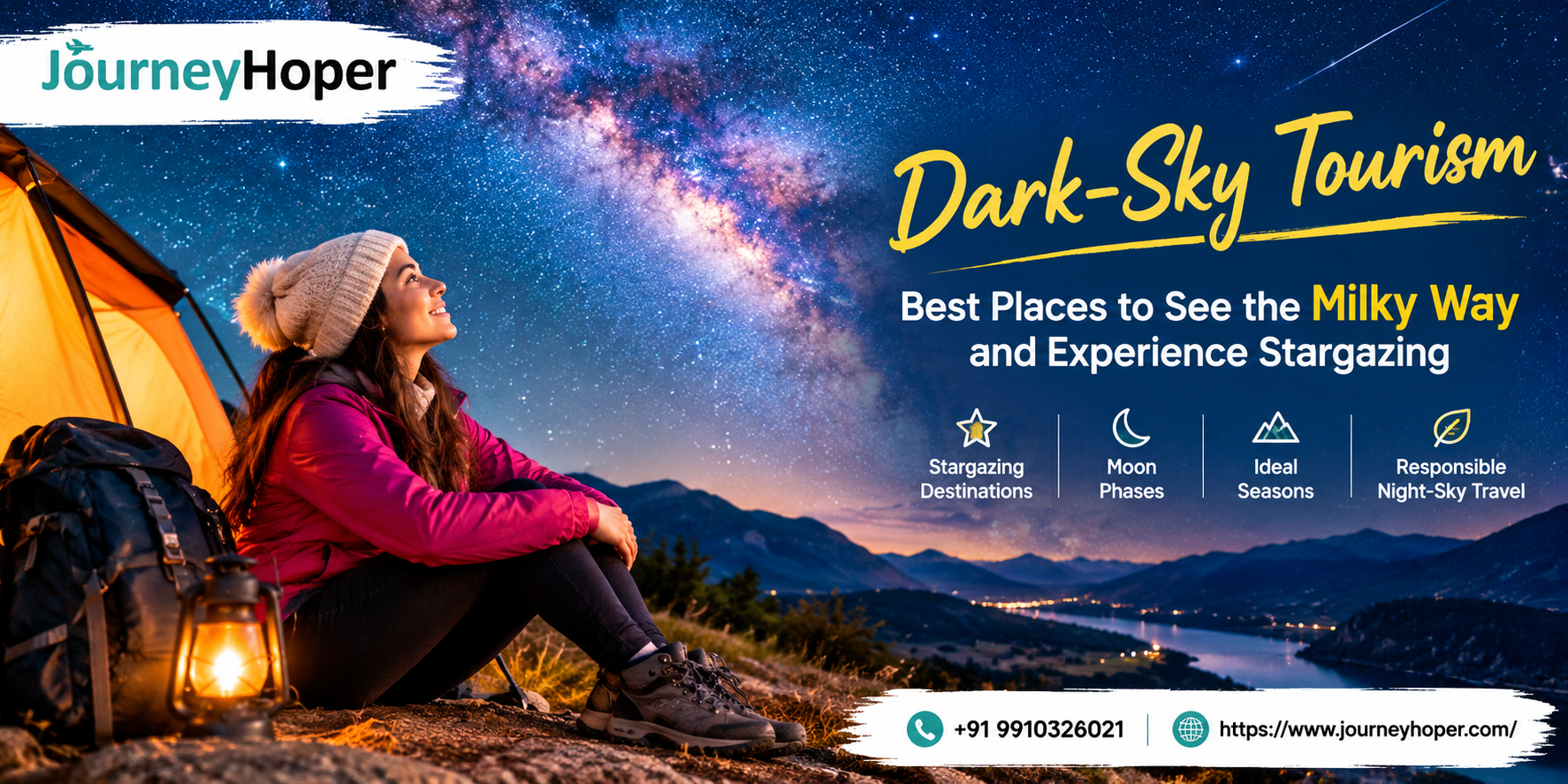
Imagine standing beneath a sky filled with thousands of sparkling stars, watching the Milky Way stretch across the darkness like a river of light. Far away from busy cities, traffic, and artificial lights, the night sky offers a peaceful experience that is difficult to find in everyday life. This is the beauty of dark sky tourism, a growing travel trend that encourages people to explore destinations known for their clear skies, limited light pollution, and incredible views of the universe.
Whether you are an adventure lover, a photography enthusiast, or someone looking for a relaxing holiday, stargazing can turn an ordinary trip into a memorable experience. From remote deserts to high-altitude mountains, several destinations around the world offer excellent opportunities to discover the beauty of the night sky.
What Is Dark-Sky Tourism?
Dark-sky tourism involves travelling to places where natural darkness makes it easier to observe stars, planets, meteor showers, and the Milky Way. Unlike conventional sightseeing, this experience often takes place after sunset and encourages visitors to slow down, disconnect from digital distractions, and appreciate the natural environment.
Many dark-sky destinations organise guided astronomy tours, telescope sessions, night photography experiences, and educational activities. Some locations also follow lighting practices designed to reduce light pollution and protect wildlife.
As more travellers seek meaningful and nature-based experiences, dark sky tourism is becoming an attractive option for couples, families, solo travellers, and adventure seekers.
Best Places for Dark-Sky Tourism Around the World
1. Atacama Desert, Chile
The Atacama Desert is one of the world's most celebrated destinations for stargazing. Its high elevation, exceptionally dry climate, and remote landscapes can provide excellent observing conditions when the weather is clear.
Visitors can join astronomy tours, observe celestial objects through telescopes, and learn about the southern hemisphere's night sky. The Milky Way can be particularly impressive during suitable moonless periods.
Best time to visit: Generally, the dry season offers good opportunities, although conditions vary by location and month. Check local forecasts before booking.
2. Aoraki Mackenzie, New Zealand
New Zealand's Aoraki Mackenzie region is famous for its dark skies and spectacular mountain scenery. The area includes Aoraki/Mount Cook National Park and the Lake Tekapo region, where visitors can combine daytime adventures with evening astronomy experiences.
Travellers may see the Milky Way, star clusters, and other celestial objects on clear nights. Guided tours can help beginners understand constellations and use telescopes.
Best time to visit: Autumn and winter can offer rewarding stargazing opportunities, but cold temperatures and changing weather require preparation.
3. Wadi Rum, Jordan
Wadi Rum offers a distinctive combination of desert landscapes, dramatic sandstone formations, and expansive night skies. Staying at a desert camp allows visitors to experience the stars far from major urban centres.
During the day, travellers can explore the desert by jeep or on guided walks. After sunset, they can relax outdoors, identify constellations, and photograph the Milky Way when conditions are favourable.
Best time to visit: Spring and autumn are popular for comfortable desert temperatures and outdoor activities.
4. Death Valley National Park, USA
Located in California and Nevada, Death Valley National Park is known for its vast desert scenery and opportunities to experience naturally dark skies. Away from artificial lighting, visitors can observe stars and planets on clear nights.
The park's enormous landscapes also provide excellent foregrounds for night-sky photography. However, summer temperatures can be dangerously high, so visitors should plan carefully and carry sufficient water.
Best time to visit: The cooler months, generally autumn through spring, are more comfortable for outdoor exploration.
5. Ladakh, India
For travellers seeking stargazing closer to home, Ladakh offers a remarkable combination of high-altitude landscapes, remote villages, and dramatic mountain views. Areas around Hanle are particularly well known for astronomy, with the Indian Astronomical Observatory located in the region.
Visitors may enjoy clear night skies, but altitude, weather, road conditions, and local access rules must be considered. Spend time acclimatising before attempting high-altitude excursions, and arrange transport and accommodation in advance.
Best time to visit: Late spring through early autumn is generally more practical for travel, although actual stargazing conditions depend on cloud cover and local weather.
Understanding Moon Phases for Better Stargazing
The Moon is one of the most important factors when planning a stargazing holiday. Its brightness can make faint stars and the Milky Way harder to see.
Before travelling, check a lunar calendar and the Moon's rise and set times for your destination. Remember that a new moon does not guarantee a perfect night: clouds, haze, dust, and artificial lighting can still affect visibility.
When Is the Best Season for Stargazing?
The ideal season depends on your destination, local weather, and the celestial objects you want to see. For Milky Way photography, the visible season varies by hemisphere.
In many northern-hemisphere destinations, the Milky Way's bright central region is best observed during the warmer months, while southern-hemisphere locations have their own viewing windows. Winter can offer crisp skies in some regions, but shorter nights, cold temperatures, and snow may affect travel plans.
For the best experience:
Essential Tips for Your First Stargazing Trip
You do not need expensive equipment to enjoy a night under the stars. A little preparation can make your experience more comfortable and rewarding.
Carry the right equipment: Pack warm layers, comfortable shoes, water, a small flashlight with a red-light mode, and a tripod if you plan to take photographs. Binoculars can also help you explore the night sky.
Arrive before sunset: Reaching your location early helps you find a safe viewing spot and become familiar with the surroundings before it gets dark.
Give your eyes time to adjust: Avoid bright phone screens and white flashlights. Your eyes can take around 20–30 minutes to adapt to darkness.
Book a guided experience: Local astronomy guides can explain constellations, help you use telescopes, and identify the best viewing times.
Check local safety advice: Remote deserts and mountains can have extreme temperatures, limited mobile coverage, and challenging terrain. Follow park guidance and avoid wandering away from designated areas.
Responsible Night-Sky Travel: Protect the Darkness
The beauty of dark-sky tourism depends on protecting the natural environment. Artificial light affects wildlife, disrupts natural rhythms, and makes it harder for people to observe the stars.
Travellers can help by using dim, downward-facing lights, keeping noise levels low, taking rubbish back with them, and respecting wildlife and local communities. Avoid shining powerful lights into the sky or using bright vehicle headlights near other stargazers.
Choose local guides and accommodation providers that follow responsible tourism practices. Follow restrictions on campfires, camping, photography, and access to protected areas. In sensitive locations, especially astronomical observatories, visitors should follow all rules about lighting and access.
Responsible travel ensures that future generations can enjoy the same extraordinary night skies.
Final Thoughts
Dark sky tourism offers a refreshing way to experience the world beyond traditional sightseeing. Whether you are watching the Milky Way over Chile's Atacama Desert, exploring the dark skies of New Zealand, or planning a high-altitude adventure in Ladakh, stargazing creates opportunities to connect with nature and discover the universe.
Choose your destination carefully, check the moon phase, travel during a suitable season, and respect the environment. With the right preparation and a little patience, even a simple night outdoors can become one of the most memorable moments of your holiday.
Sometimes, the best travel experience is not about visiting more places. It is about standing still, looking up, and discovering just how incredible the night sky can be.
Looking for further information on airline policies, terms & conditions, etc.
Call now to know everything in detail.

406, 4th Floor, Suncity Trade Tower, Sector 21 Haryana 122016 Gurgaon, India


© 2026 JourneyHoper.com