


Please Wait...
To get you all the results so you can compare the best options
 -
12 Nov, 2026 -- 13 Nov, 2026
For cheapest fares on selected flights, please call us now!
+91 9910326021To get you all the results so you can compare the best options
-
12 Nov, 2026 -- 13 Nov, 2026
For cheapest fares on selected flights, please call us now!
+91 9910326021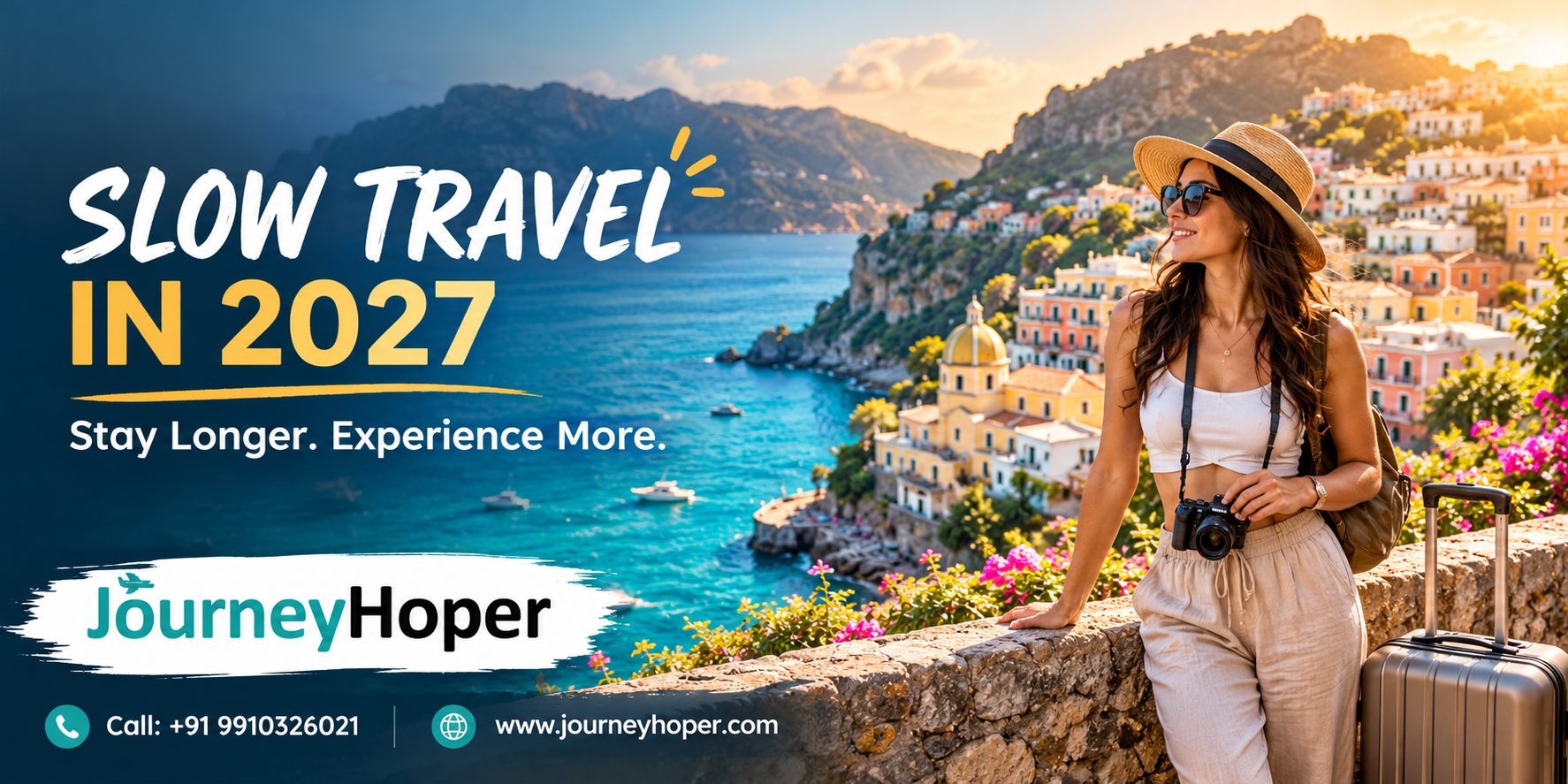
Travel in 2027 is not just about visiting more places or checking famous attractions off a list. Many travelers are beginning to appreciate a different approach: spending more time in one destination, understanding local culture, enjoying everyday experiences, and exploring without constantly watching the clock. This approach is known as slow travel.
Instead of visiting five cities in seven days, slow travel encourages you to choose one or two destinations and experience them more deeply. You can enjoy local food, discover hidden places, meet residents, and experience a destination beyond its popular tourist attractions.
Whether you are planning a solo trip, a romantic holiday, a family vacation, or a budget-friendly adventure, slow travel can make your journey more meaningful. In this guide, we will explore why slow travel is becoming an appealing travel style for 2027 and how you can plan a relaxed, enjoyable, and affordable trip.
Slow travel is a travel approach that focuses on quality rather than quantity. Instead of rushing between destinations, travelers spend more time exploring one location and connecting with its surroundings.
For example, rather than spending two days each in Paris, Rome, and Barcelona, you could spend a full week in Rome. This gives you time to explore historical landmarks, visit neighborhood markets, enjoy traditional Italian meals, and discover quieter streets away from the usual tourist routes.
The idea is not simply to travel slowly. It is to travel more thoughtfully.
Slow travel also encourages responsible tourism, supporting local businesses, choosing suitable transportation, and appreciating the everyday life of the destination.
One of the biggest advantages of slow travel is having more time in a destination. Frequent hotel changes, airport transfers, train journeys, and packing can make a holiday exhausting.
With a longer stay, you can unpack once, settle into your accommodation, and explore at a comfortable pace.
Imagine spending seven days in Kerala instead of trying to cover Kerala, Goa, and Karnataka in one week. You could enjoy the backwaters, explore local villages, taste regional cuisine, and spend an entire afternoon relaxing near the beach.
Longer stays also provide flexibility. If you discover an interesting local market or a beautiful walking trail, you can change your plans without worrying about missing the next destination.
Popular tourist attractions are worth visiting, but they represent only one part of a destination. Spending more time in one place allows you to experience its culture, traditions, and daily lifestyle.
You can visit neighborhood cafés, shop at local markets, attend cultural events, take cooking classes, and explore residential areas respectfully.
For instance, a longer stay in Jaipur gives you time to explore its famous forts while also discovering traditional crafts, local food, and smaller markets.
These everyday experiences often become the most memorable parts of a trip. Instead of simply taking photographs, you begin to understand what makes a destination unique.
Slow travel can help travelers manage their expenses more effectively. Although staying longer does not automatically make a trip cheaper, it creates opportunities to reduce certain costs.
Here are some practical ways to save money:
· Choose weekly accommodation rates: Apartments, guesthouses, and homestays may offer discounts for longer bookings.
· Reduce transportation expenses: Staying in one destination means fewer intercity transfers, flights, and taxi journeys.
· Eat local food: Neighborhood restaurants and local eateries can offer better value than tourist-focused dining spots.
· Shop for groceries: If your accommodation has a kitchen, preparing some meals can reduce food expenses.
· Travel during shoulder season: Visiting outside peak periods may offer better accommodation prices and a more relaxed atmosphere.
Before booking, compare the total cost of a longer stay with the cost of a multi-destination trip. Include accommodation, meals, local transportation, activities, insurance, and any visa requirements.
A simple budget can help you decide how long you can comfortably stay without overspending.
Some destinations are particularly suitable for travelers who want to spend more time exploring at a relaxed pace.
Kerala offers a combination of backwaters, beaches, green landscapes, and cultural experiences. You can spend several days in Fort Kochi, explore local markets, visit nearby villages, and enjoy a peaceful houseboat experience.
Rishikesh is suitable for travelers interested in yoga, nature, riverside walks, and spiritual experiences. A longer stay gives you time to explore the surroundings without treating every activity as a checklist item.
Bali offers opportunities to explore local cafés, traditional villages, rice terraces, temples, and coastal areas. Staying in one area for several days can help you avoid spending too much time in traffic.
Kyoto is ideal for travelers interested in traditional architecture, gardens, temples, seasonal scenery, and Japanese culture. A longer stay allows you to explore popular attractions early in the day and discover quieter neighborhoods later.
Lisbon offers historic streets, local food, viewpoints, cultural activities, and easy access to nearby coastal destinations. Spending a week here can provide a more relaxed experience than trying to cover several European cities in a short trip.
When selecting a destination, consider your interests, travel season, accommodation costs, transportation options, and the amount of time you have available.
Good planning is still important, even when your goal is to travel without rushing.
Start by selecting a destination that offers enough activities to keep you interested for several days. Consider nature, food, culture, sightseeing, and nearby day trips.
Avoid choosing a location simply because it is trending on social media. Your destination should match your travel interests and budget.
Depending on your destination and schedule, you might plan a four-day getaway, a seven-day holiday, or a longer stay of two weeks or more.
A useful approach is to spend at least three to five nights in each major destination rather than changing locations every day. Some places may require more time, while smaller destinations can be explored comfortably in less.
Divide your available travel budget into accommodation, meals, transportation, activities, and emergency expenses.
For example, if your total budget is ₹35,000 for seven days, that gives you an average of ₹5,000 per day for all trip expenses. This is only a planning calculation, not a guarantee that a particular destination will fit the budget.
Research actual prices before booking, and keep some money aside for unexpected costs.
Look for accommodation near public transportation, local markets, restaurants, and the places you plan to visit regularly.
A slightly more expensive room in a convenient location might save money on daily transportation. Compare weekly discounts, cancellation policies, kitchen facilities, and guest reviews before confirming your booking.
Plan one main activity per day and leave the remaining time open for exploration, rest, or unexpected discoveries.
You do not need to book every hour in advance. A flexible itinerary helps you enjoy experiences that you might otherwise miss.
A common mistake is trying to visit every famous attraction during a single trip. This can turn a holiday into a series of deadlines.
Use these simple strategies to create a more relaxed itinerary:
· Limit daily activities: Choose two or three meaningful activities rather than filling every hour.
· Group nearby attractions: Explore places in the same neighborhood on the same day to reduce travel time.
· Allow rest days: Include time for relaxing, laundry, shopping, or enjoying a café.
· Avoid unnecessary hotel changes: Stay in one accommodation for several nights whenever practical.
· Research travel times: Distances on a map can be misleading, especially in busy cities or mountainous regions.
· Leave room for surprises: Local festivals, scenic walking routes, and small family-run restaurants can become unexpected highlights.
Remember, a successful trip is not measured by the number of places you visit. It is measured by how much you enjoy the experience.
Slow travel is an excellent option for people who enjoy cultural experiences, relaxed sightseeing, nature, photography, local food, and meaningful interactions.
It can also suit families who prefer fewer transfers and travelers working remotely, provided they have suitable internet access and comply with local visa and work regulations.
However, it may not be ideal for everyone. Travelers with limited vacation days, people attending events in multiple cities, or visitors who specifically want a fast-paced sightseeing tour may prefer a more traditional itinerary.
You can also combine both approaches. Spend most of your trip in one destination and add a short visit to a nearby city if time and budget allow.
Slow travel in 2027 is about making every journey more meaningful rather than trying to do everything at once. Longer stays give you opportunities to explore local culture, discover lesser-known places, enjoy regional food, and manage your travel expenses more carefully.
With thoughtful budget planning, convenient accommodation, and a flexible itinerary, you can create a holiday that feels less stressful and more rewarding.
Instead of asking how many destinations you can visit in one week, ask yourself how deeply you would like to experience one place.
Sometimes, the best travel memories come from staying a little longer, taking the scenic route, and allowing yourself the time to truly enjoy where you are.
Looking for further information on airline policies, terms & conditions, etc.
Call now to know everything in detail.

406, 4th Floor, Suncity Trade Tower, Sector 21 Haryana 122016 Gurgaon, India


© 2026 JourneyHoper.com